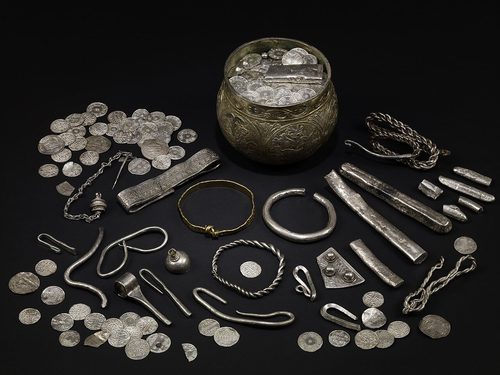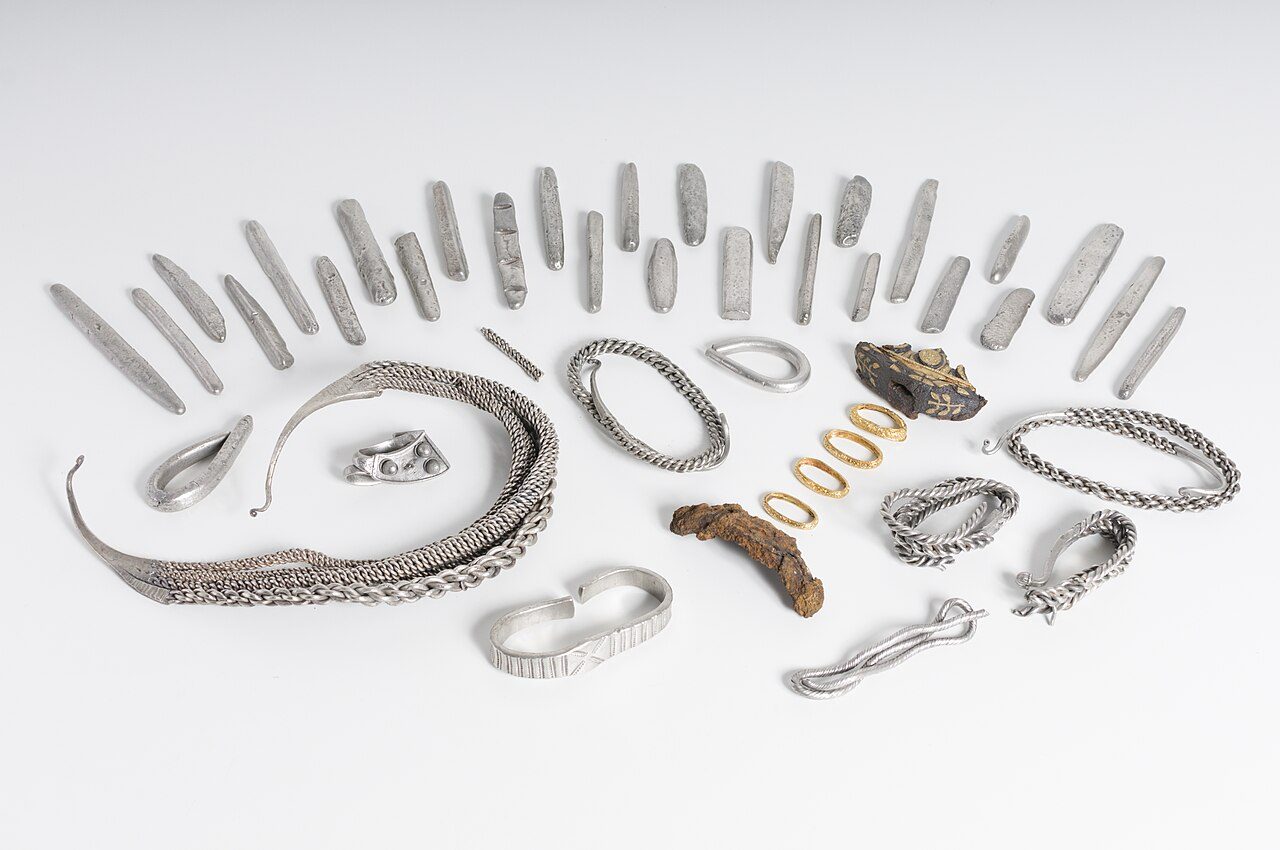
In May 2012 metal detectorists searching a field near Bedale found a heap of silver bars and rings and a lump of corroded iron. They reported it through the Portable Antiquities Scheme. The iron turned out to be the most remarkable piece: the pommel and guard of a large sword, both faced with plaques of gold foil.
The pommel is broadly triangular, a form typical of the later 9th century. Its gold plaques are engraved with lively, nicked-edge animal interlace in the Anglo-Saxon Trewhiddle style, and four oval gold bands from the grip carry matching ornament. Silver is the usual decoration on sword pommels of this date; covering one in gold foil like this is, so far as is known, unique.
The silver is just as telling. The largest collar is made of four twisted cables of different sizes, one of plaited rods and three of hollow, coiled strands, hammered together into flat ends. Each technique has parallels, but the combination is unknown elsewhere, and curators describe it as a western Viking variant. Two complete six-plait neck-rings, half of a triple-strand ring cut for its metal, an arm-ring and a brooch complete the ornaments. A fragment of a 'Permian' ring, a type made far to the east in what is now Russia, shows how far some of this silver had travelled.
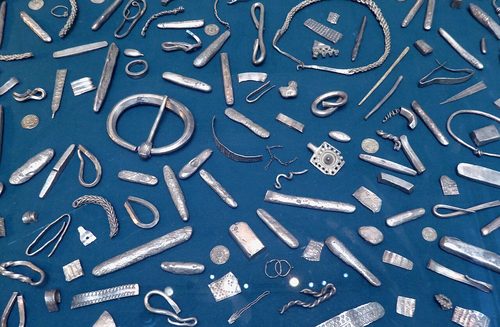
Most of the weight is in 29 ingots, bars of silver from 40 g to 146 g, many tested with knife nicks to check the metal was good. There are no coins at all. That fits the bullion economy of the Viking north before coinage became common there: silver was valued by weight, and ingots were the most convenient way to store and carry it. Lead isotope analysis of the silver by Jane Kershaw suggests that it came from at least three sources: British, French, and silver from the Islamic Middle East.
The hoard is earlier than both Cuerdale and the Vale of York Hoard and complements them well: where they are dominated by coins and hacksilver, Bedale shows the prestige objects and raw ingots of the same world. It was declared Treasure, conserved by York Archaeological Trust, and bought by the Yorkshire Museum for £50,000 after a public fundraising campaign.
Highlights
An iron pommel and guard, 84 mm wide, faced with gold foil plaques engraved in the late 9th-century Trewhiddle style. The extensive use of gold on such a pommel is unique.
A large neck-collar of four different twisted cables hammered into flat terminals, a variant not known from any other find.
Four oval gold bands from the sword grip, decorated with animal interlace to match the pommel.
Three of the 29 silver ingots are incised with crosses, a detail also seen on ingots at Cuerdale.
What is in it
An iron sword pommel and guard inlaid with gold foil, four gold hilt bands and six gold rivets, four silver neck-rings and collars, an arm-ring, a brooch, a fragment of a Permian ring and 29 silver ingots.
Size: 47-48 items.
| Item | Number | Notes |
|---|---|---|
| Silver ingots | 29 | 40 to 146 g each, many with testing nicks, three with incised crosses |
| Sword fittings | 11 | iron pommel and guard with gold foil plaques, 4 gold hilt bands, 6 tiny gold rivets |
| Neck-rings and collars | 4 | one large four-cable collar, two six-plait neck-rings, one triple-strand ring cut in half |
| Other silver | 3 | an arm-ring, a penannular brooch and a fragment of a 'Permian' ring from the Russian region |
Photographs
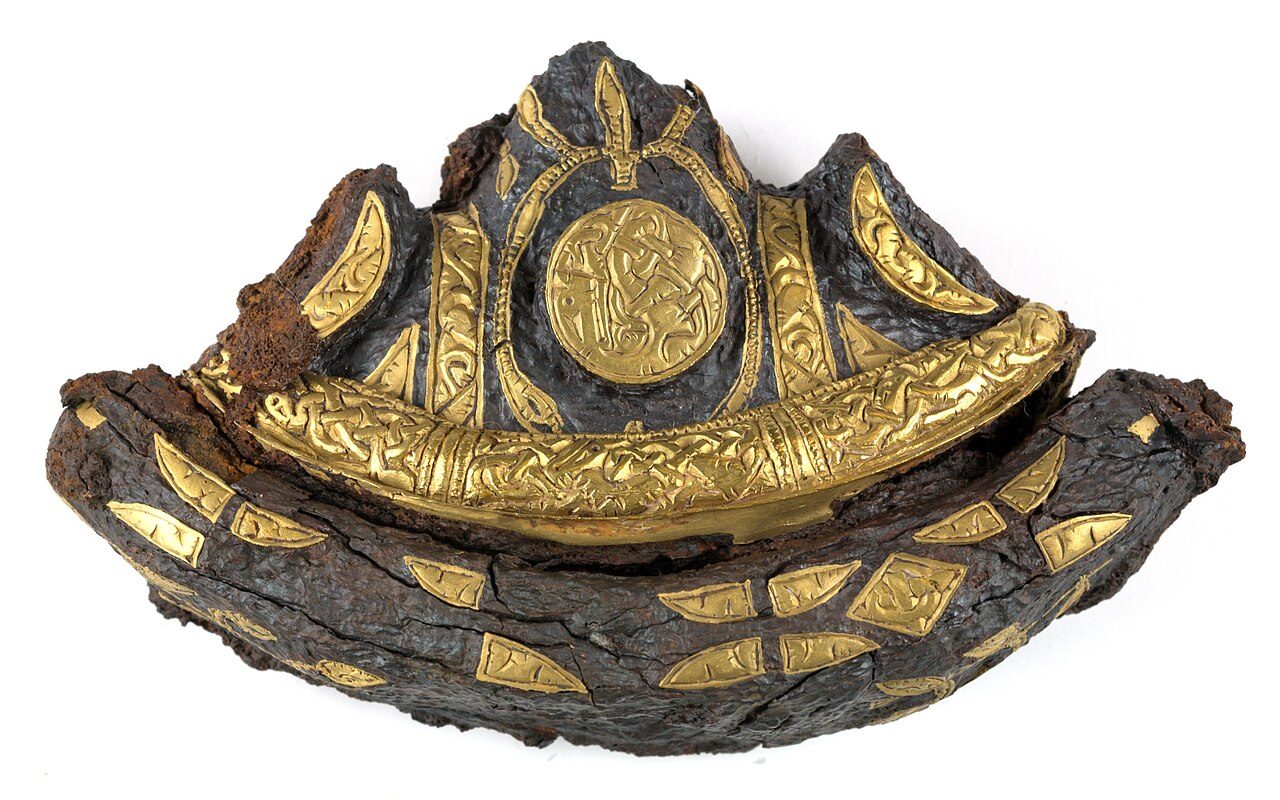
Photo: ed by: York Museums Trust Staff, CC BY-SA 4.0, via Wikimedia Commons
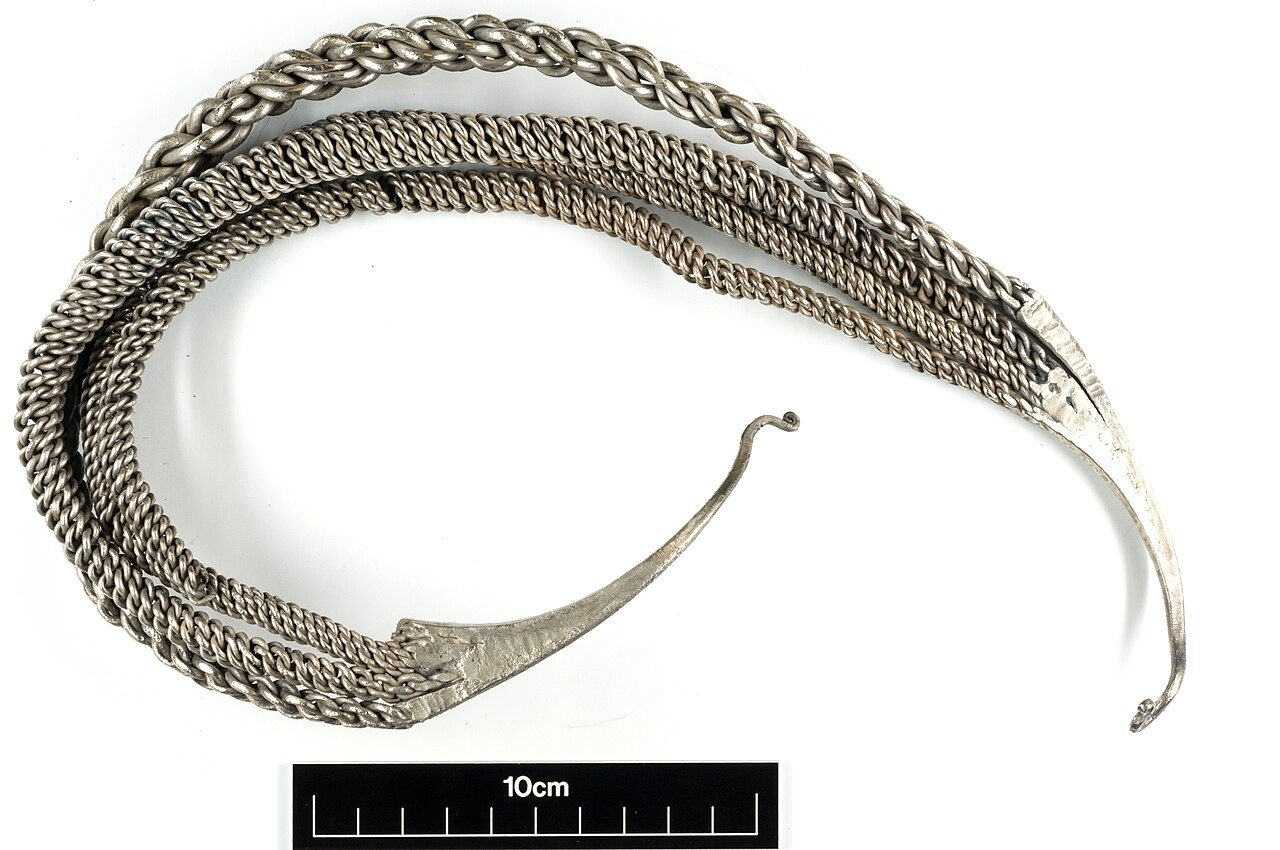
Photo: ed by: York Museums Trust Staff, CC BY-SA 4.0, via Wikimedia Commons
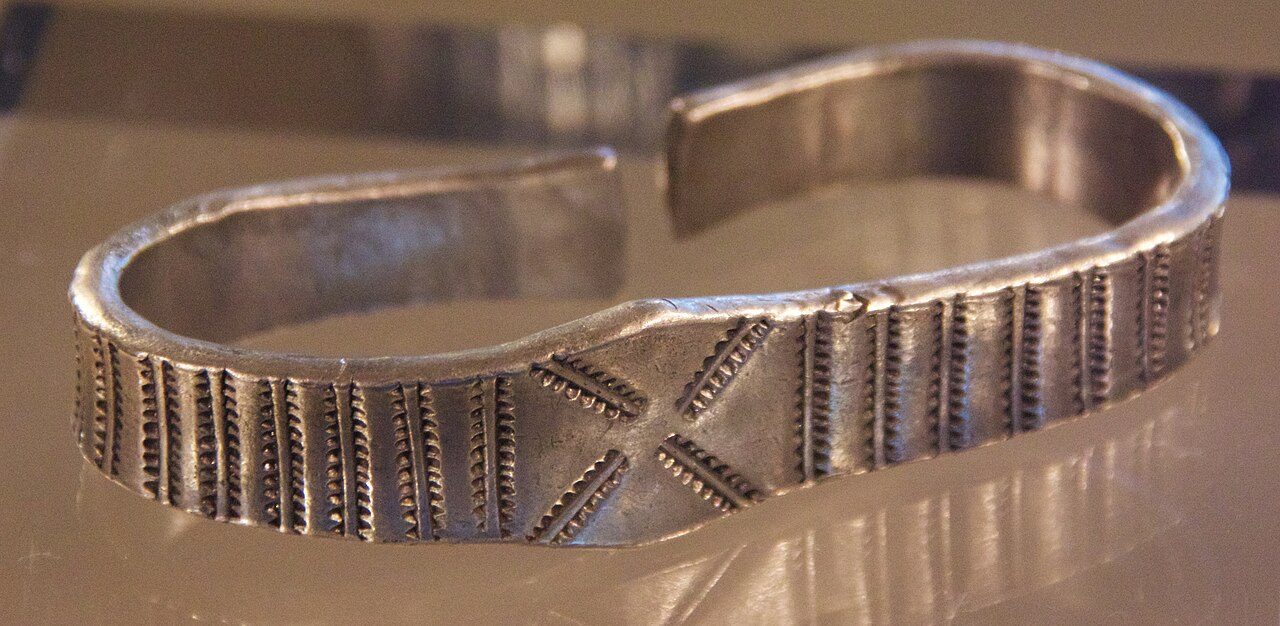
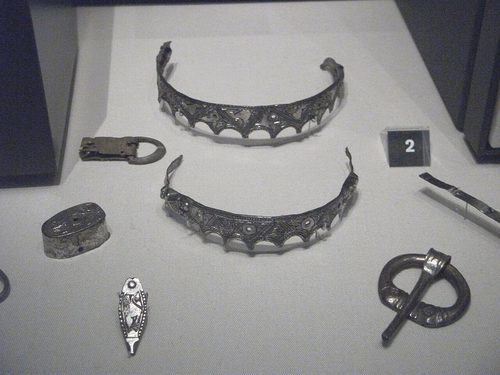
Photo: Mike Peel ( www.mikepeel.net )., CC BY-SA 4.0, via Wikimedia Commons
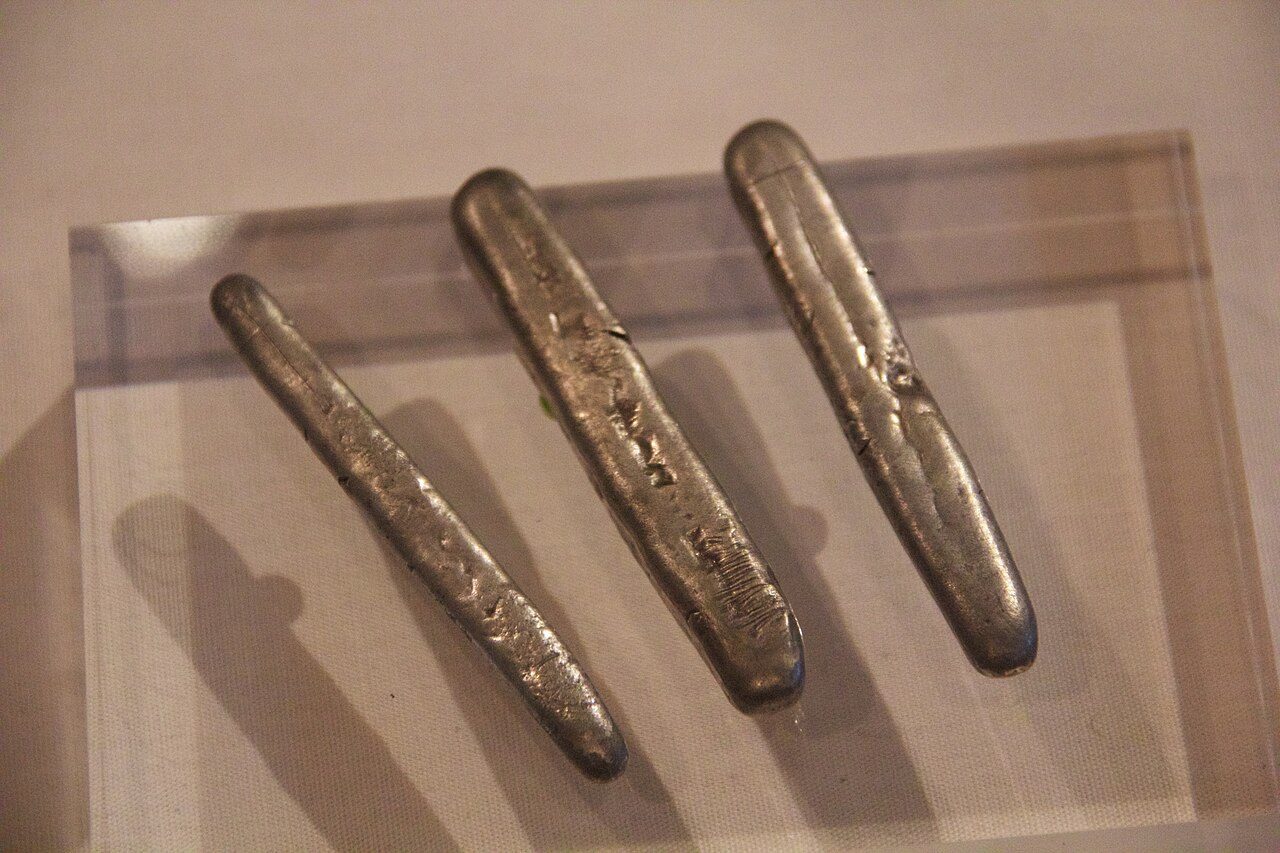
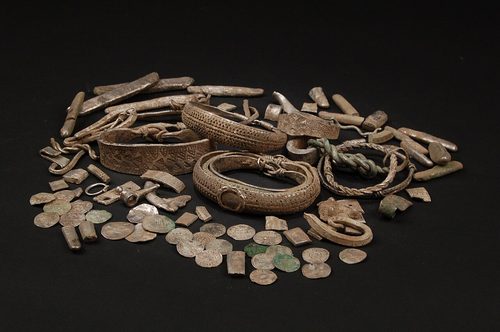
Photo: Mike Peel ( www.mikepeel.net )., CC BY-SA 4.0, via Wikimedia Commons
How it is dated
With no coins, the date rests on style. The Trewhiddle-style ornament of the sword fittings belongs to the late 9th century and may have lasted into the early 10th in northern England, and the pommel follows a late 9th-century type. The Portable Antiquities Scheme record gives a broad range of c. 850-950; the Yorkshire Museum says late 9th or early 10th century.
What happened after the find
Reported through the Portable Antiquities Scheme and declared Treasure (case 2012 T373). The Yorkshire Museum acquired it for £50,000 after a public appeal, the reward going to the finders and landowner.
Where sources differ
- Item count: Wikipedia says 48; the Portable Antiquities Scheme record gives a quantity of 47. The difference probably lies in whether the neck-ring cut in two counts as one item or two.
- Deposit date: PAS gives c. 850-950; Wikipedia's infobox gives 850-900; the Yorkshire Museum says late 9th or early 10th century.
- The £50,000 price and Jane Kershaw's lead-isotope results come from Wikipedia only.
Questions
Where can I see the Bedale Hoard?
At the Yorkshire Museum in York, which bought it in 2014. It features in the Viking North exhibition that opened in July 2025.
Why are there no coins in the Bedale Hoard?
In the Viking north of the late 9th century silver was often valued by weight rather than counted as coin. Ingots and rings were stores of bullion, so a hoard of wealth could contain no coins at all.
What is the Bedale sword pommel?
It is the iron top of a sword hilt faced with gold foil plaques decorated in the Anglo-Saxon Trewhiddle style. Gold on such a pommel is otherwise unknown, making it the hoard's most important object.