In September 2014 a metal detectorist searching church land near Balmaghie in Kirkcudbrightshire, with permission, turned up a silver arm-ring and recognised the Viking-age punched decoration at once. He reported it straight away, and the county archaeologist dug the find the same day. Below a first layer of ingots and arm-rings, with a silver cross lying face down among them, a further search found a second, deeper deposit. That lower level held the real surprises.
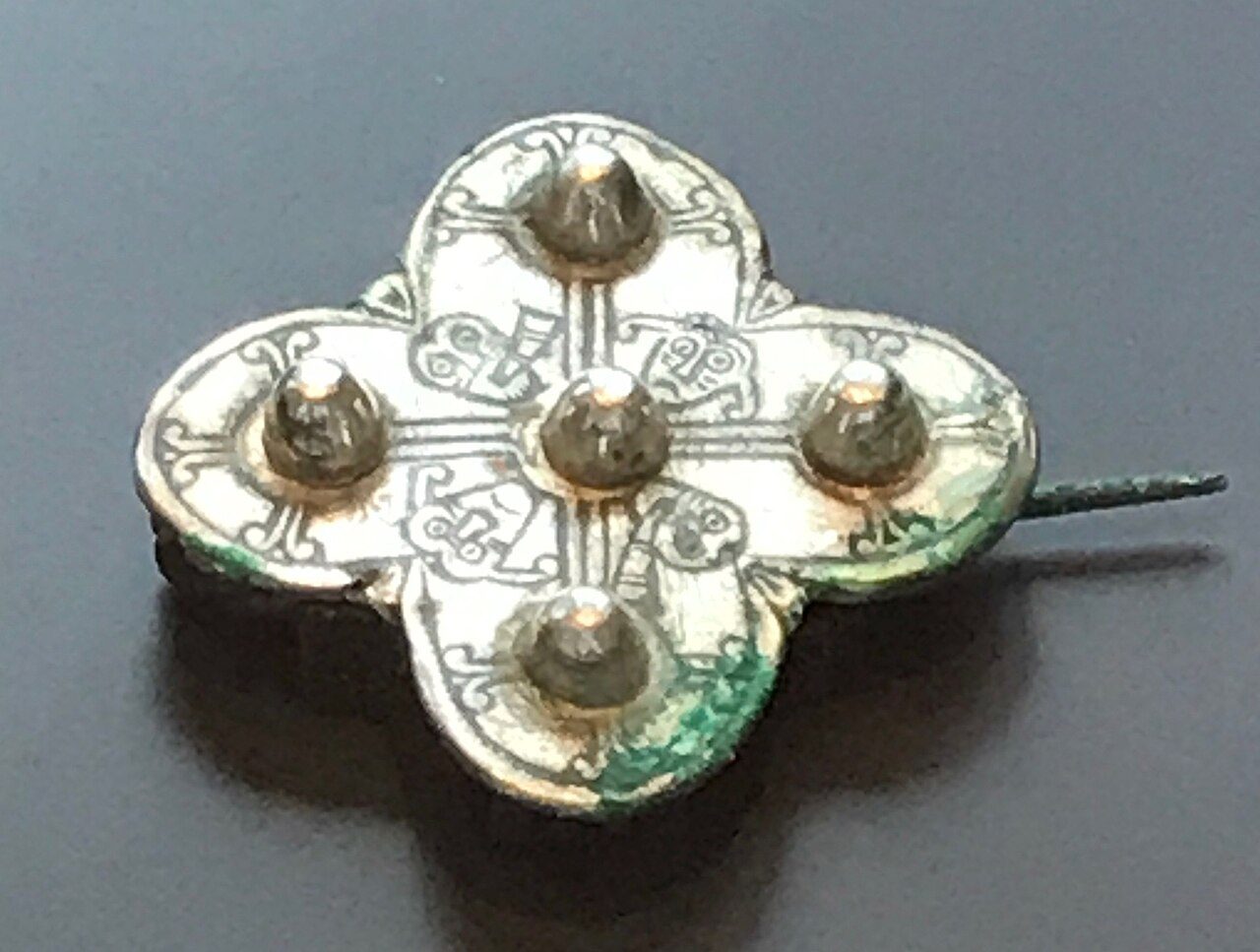
The upper deposit looks like an ordinary Viking bullion hoard: arm-rings flattened and folded for storage, ingots and cut silver, the loose change of an economy that paid by weight. The lower deposit was different. It held a parcel of 15 ingots and 31 arm-rings in a leather bag, a cluster of four decorated arm-rings tied together with a small wooden box of gold objects inside, among them a pin shaped like a bird, and a lidded silver vessel still wrapped in its ancient cloth.
The vessel was a hoard inside a hoard, packed with 27 objects. It held seven Anglo-Saxon brooches, beads and pendants, silk that had travelled from the Byzantine world, and a small rock crystal jar mounted in gold whose inscription names a Bishop Hyguald. Analysis published in 2024 traced the vessel's own metal to a mine in what is now Iran; its decoration of fire altars and big cats belongs to the art of the Sasanian or early Islamic Persian world. It had come thousands of miles and may have been an heirloom long before it was buried.
For a 'Viking' hoard, very little of it is Scandinavian. Most of the bullion was made in the Irish Sea region, the brooches and jar point to Anglo-Saxon Northumbria, of which Galloway was then part, and the arm-rings carry inscriptions in Anglo-Saxon runes, not Norse ones. They give short names or name-fragments, and in 2025 National Museums Scotland published a reading of the longest as 'this is the community's property'. Together with the cross and the bishop's jar, that has led curators to suggest the treasure belonged to a group, perhaps a religious community, rather than one warrior.
Why it was buried around AD 900, and why nobody came back, is unknown. Excavation around the findspot found traces of a timber building and a large ditched enclosure, possibly linked to an early church site, and the field has since been scheduled as a monument of national importance.
Under Scots law the hoard was treasure trove and passed to the Crown. In 2017 it was allocated to National Museums Scotland, which raised the £1.98 million reward paid to the finder and the landowner with help from the National Heritage Memorial Fund and the Art Fund.
Highlights
A silver vessel of west Asian origin, decorated with fire altars and animals, found wrapped in textile and packed with 27 objects.
A small crystal jar in a gold filigree mount, inscribed with the name of a Bishop Hyguald and probably once in a Northumbrian church treasury.
A silver cross with engraved arms and a fine spiral chain still wrapped round it, as if recently worn.
Silver arm-rings scratched with Anglo-Saxon runes giving names or name-fragments such as ED, TIL and BER, and one longer text read as 'this is the community's property'.
A gold pin topped with a bird, found in a tiny wooden box inside the bound cluster of arm-rings.
What is in it
Silver ingots and arm-rings in an upper and a lower deposit, a cluster of gold objects, a pectoral cross, and a lidded silver vessel wrapped in textile and packed with brooches, beads, silk and a gold-mounted rock crystal jar.
Size: more than 100 objects. Weight: over 5 kg (silver, gold and other materials).
| Item | Number | Notes |
|---|---|---|
| Silver bullion | dozens | broad-band arm-rings and ingots; one parcel in a leather bag held 15 ingots and 31 arm-rings |
| Arm-ring cluster | 4 rings | complete ribbon arm-rings bound together, with a small wooden box of three gold objects tucked inside |
| Lidded vessel | 1 (with 27 objects inside) | silver, wrapped in textile; contents include Anglo-Saxon brooches, beads, silk and a rock crystal jar |
| Pectoral cross | 1 | silver, with a fine wire chain, from the upper deposit |
Photographs
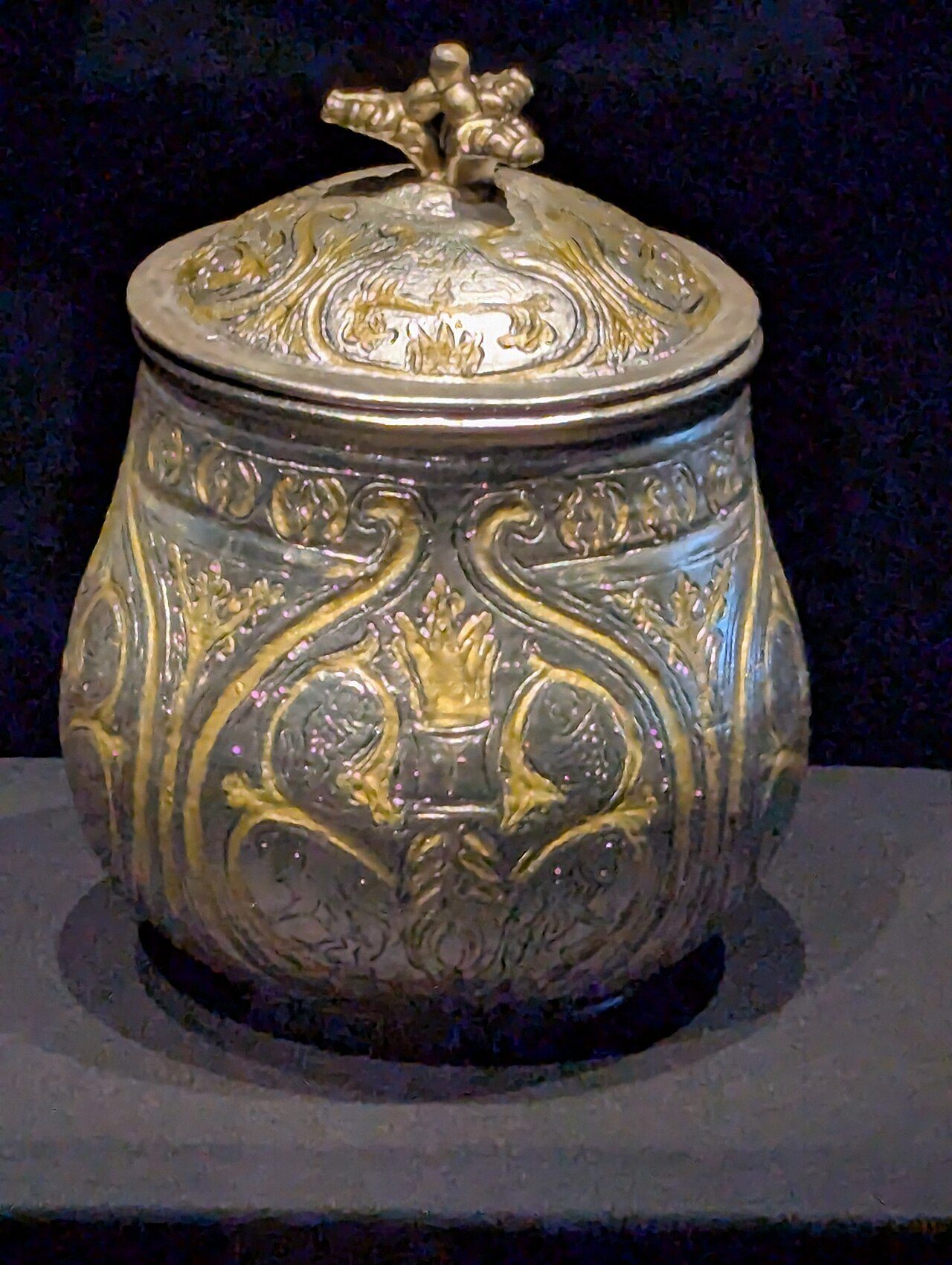
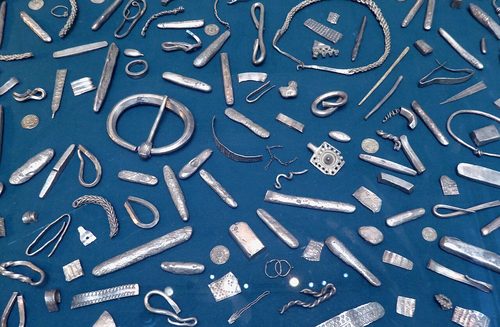
Photo: CWWrites, CC0, via Wikimedia Commons
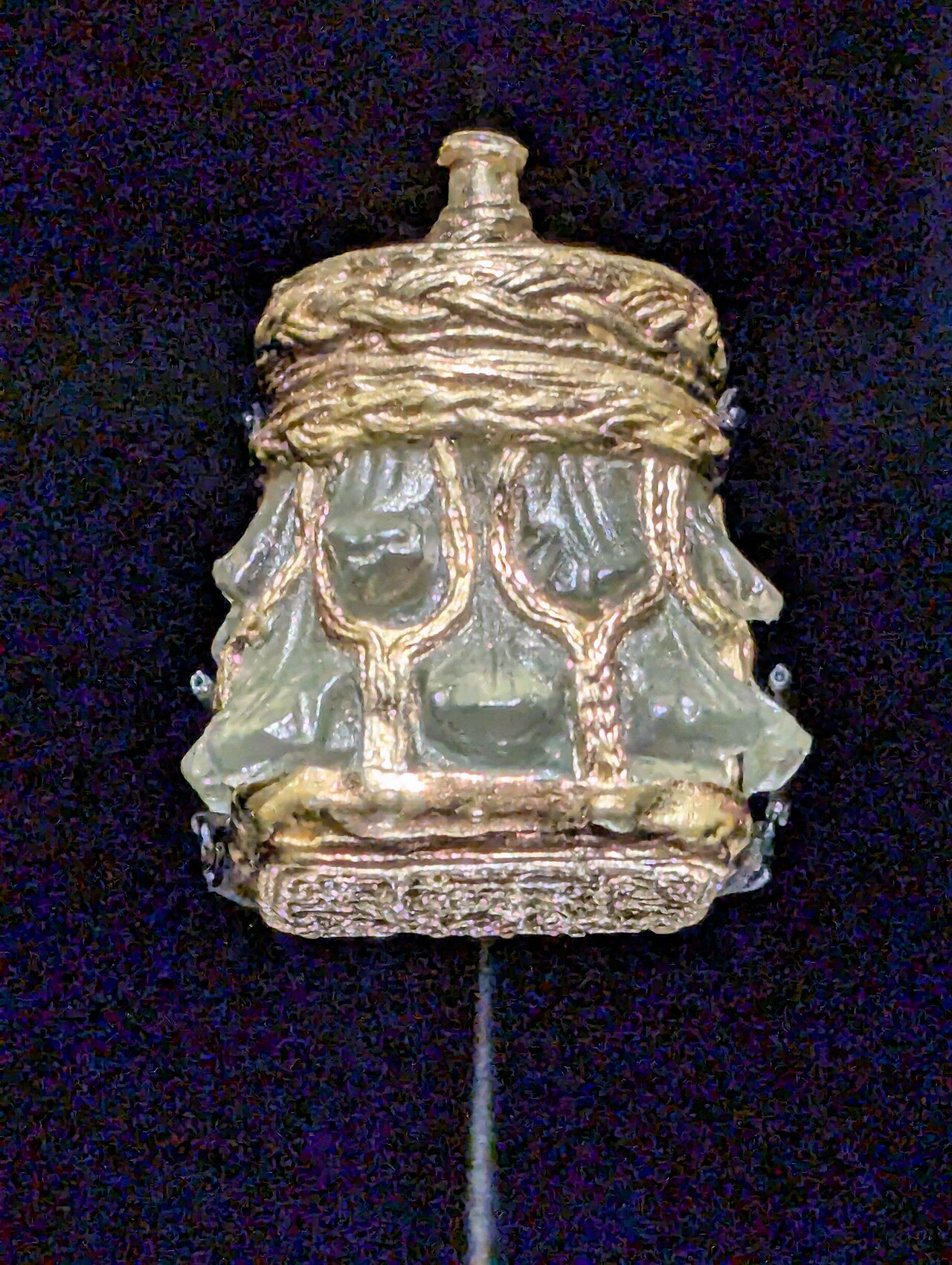
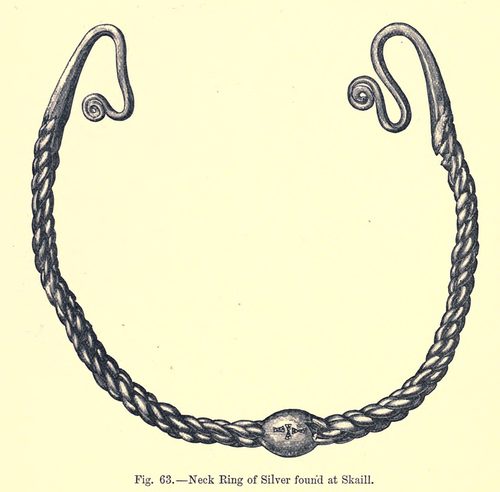
Photo: CWWrites, CC0, via Wikimedia Commons
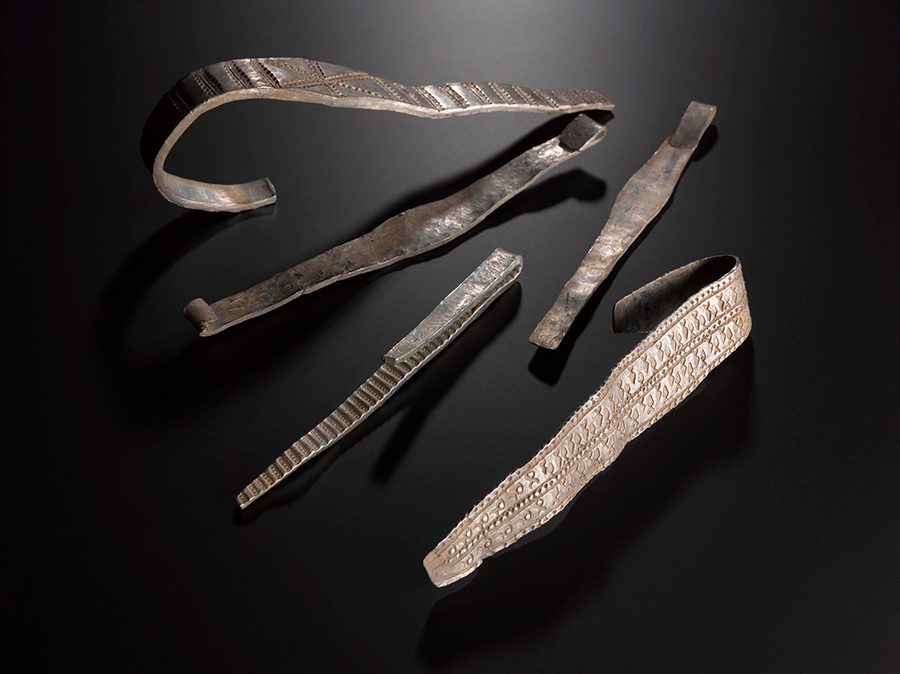
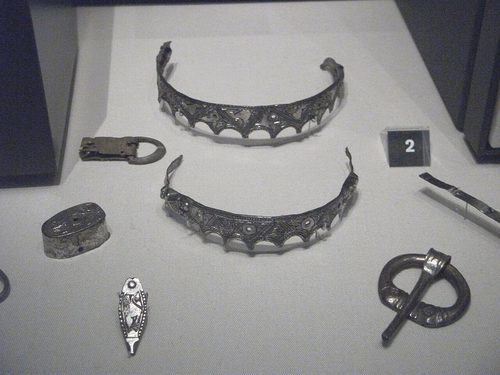
Photo: National Museums Scotland, CC BY-SA 4.0, via Wikimedia Commons
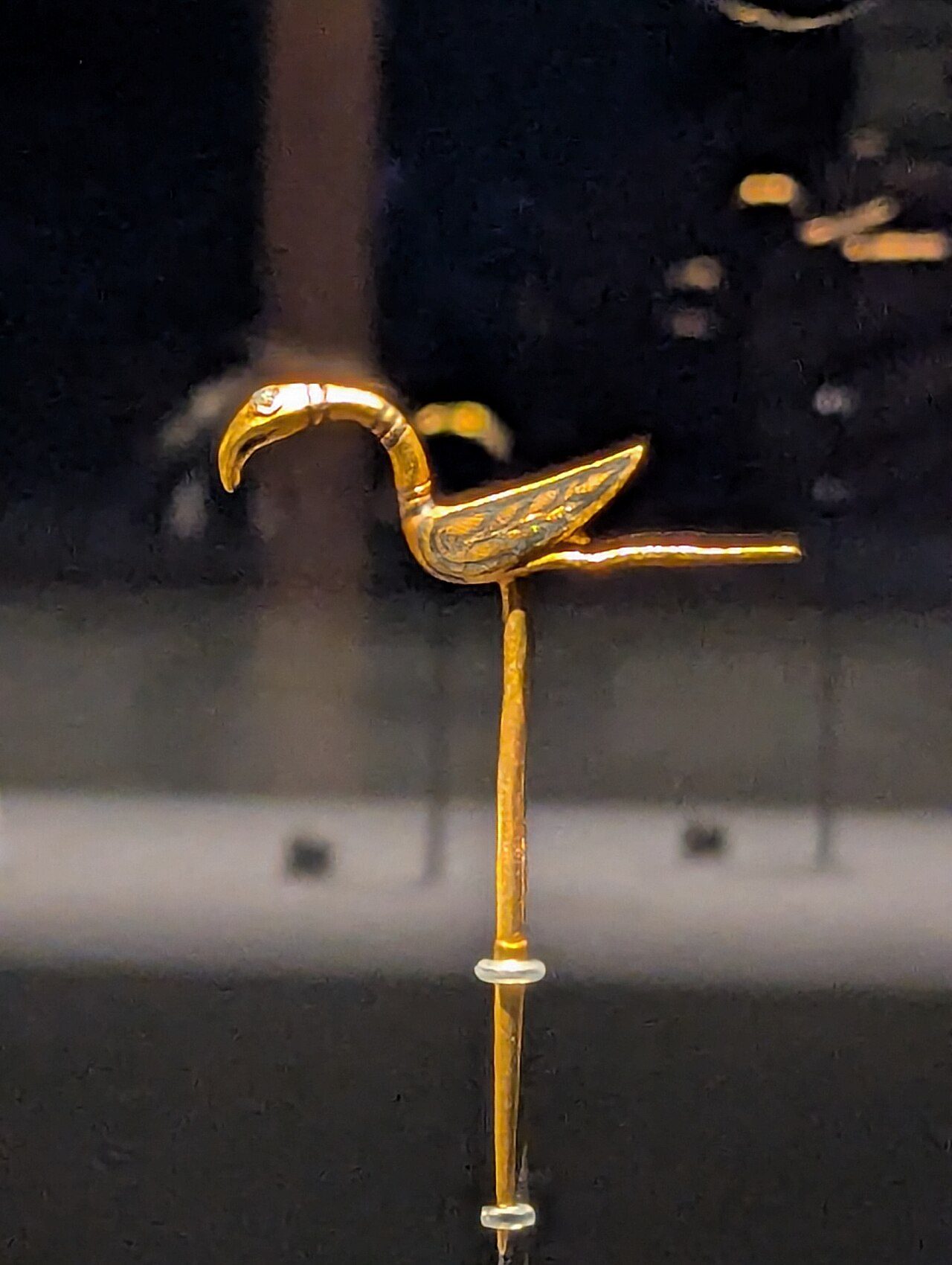
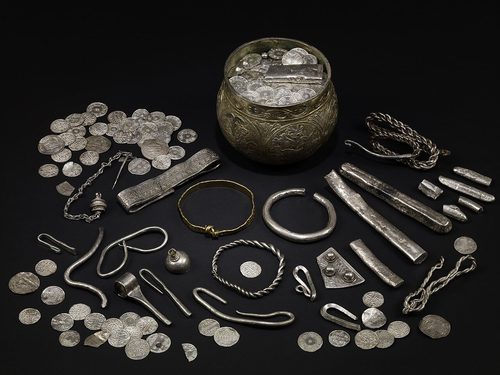
Photo: CWWrites, CC0, via Wikimedia Commons
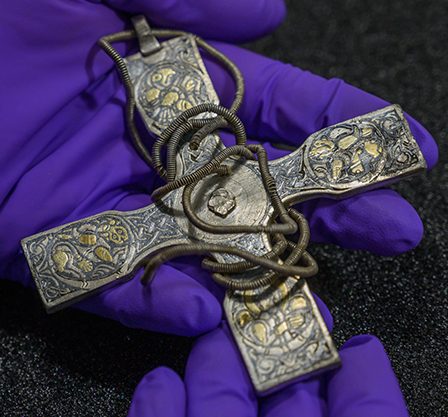
Photo: National Museums Scotland, CC BY-SA 4.0, via Wikimedia Commons
How it is dated
There are no coins to date the burial. National Museums Scotland dates it to about AD 900 from the broad-band arm-rings, a type found in datable hoards of about 880-930, including Cuerdale. Several objects inside the vessel were already old heirlooms when they were buried.
What happened after the find
Reported to Scotland's Treasure Trove Unit and claimed for the Crown under Scots law. The Queen's and Lord Treasurer's Remembrancer allocated it to National Museums Scotland in 2017, which raised the £1.98 million reward, shared between the finder and the Church of Scotland as landowner.
Where sources differ
- Deposit date: National Museums Scotland says c. AD 900; Wikipedia also says sometime in the mid-9th or 10th century.
- Origin of the vessel: identified as west Asian (Sasanian-style iconography, metal traced to Iran) in research reported in 2024; earlier accounts called it Carolingian.
- The reading 'this is the community's property' is offered by NMS with caveats; the abbreviated names could also be ordinary words.
- Finders: NMS says 'a metal-detectorist' on one page and 'metal detectorists' on another; Wikipedia says one detectorist accompanied by two others.
Questions
Where is the Galloway Hoard now?
It belongs to National Museums Scotland in Edinburgh. It toured Scottish venues and then Australia in 2025-26, so check the museum's website for where it is on show.
Is the Galloway Hoard really Viking?
It dates to the Viking Age and its silver bullion follows Viking practice, but little of it is Scandinavian. Much of it is Anglo-Saxon or Irish Sea work, and its runes are Anglo-Saxon, which is why curators now describe it more carefully.
How much was the Galloway Hoard worth?
It was valued at £1.98 million, which National Museums Scotland raised to acquire it in 2017.
Sources
- Galloway Hoard (Wikipedia)
- The Galloway Hoard (National Museums Scotland)
- A runic revelation: who owned the Galloway Hoard? (National Museums Scotland)
- How 'Viking' is the Galloway Hoard? (National Museums Scotland)
- 'Amazing' Viking-age treasure travelled half the world to Scotland (The Guardian, 2024)
- Wikidata Q18352796 (CC0)