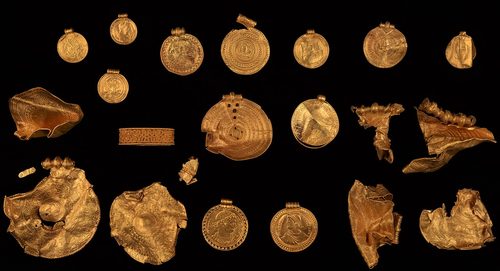
Thin one-sided gold pendants of 5th- and 6th-century Scandinavia, stamped with riders, gods and runes, and the medieval German coins that share their name.
A bracteate is a disc of sheet gold stamped on one side only, so the design stands up in relief on the front and shows in reverse on the back. The name comes from the Latin bractea, a thin leaf of metal. Most were made in southern Scandinavia and northern Germany between about AD 450 and 550, given a beaded rim and a loop, and worn on a cord or chain around the neck. Many have been found in hoards, often several together with Roman gold coins and other jewellery.
The idea began with Roman imperial medallions and solidi, which reached the north as pay, tribute and gifts, and much of the gold itself is thought to have come from melted Roman coin. The earliest bracteates copy the emperor's diademed bust; later ones turn it into something else entirely. Since the 19th century they have been sorted by motif: A-type with a single human head, B-type with whole figures, C-type, the commonest, with a large head above a horse-like animal, and D-type with interlaced animals alone. The C-type rider is often read as the god Wodan or Odin, though some scholars argue the heads are chieftains or kings.
More than a thousand Migration Period bracteates are known, and well over a hundred of them carry runic inscriptions, which makes them one of the largest sources for the earliest Germanic writing. Some texts are single charm words such as alu; others are longer. The most famous recent find, the Vindelev hoard found near Jelling in Denmark in December 2020, contained about 800 g of gold, including a bracteate whose inscription is read by its editors as "He is Odin's man", the earliest known mention of the god's name. Another Vindelev bracteate is almost 14 cm across, the largest known. In England, the small Undley bracteate from Suffolk, 2.3 cm across and 2.24 g, carries one of the earliest runic inscriptions found in the country.
Bracteates are easy to recognise: thin, single-sided, pressed rather than struck, with a decorated frame and a suspension loop. They show how Roman imagery was absorbed and reworked in the north, and the identical die-stamped pieces found in distant hoards point to gifts and alliances between ruling families.
The same word is used for a quite different object, the medieval silver bracteate or Hohlpfennig (hollow penny), struck on very thin silver from about 1130 in Saxony and Thuringia and used across much of Germany into the 14th century. These were real coins, 22 to 45 mm across, and were regularly recalled and reissued at a loss to the holder, which discouraged hoarding. Hoards of several hundred are still found.
Examples
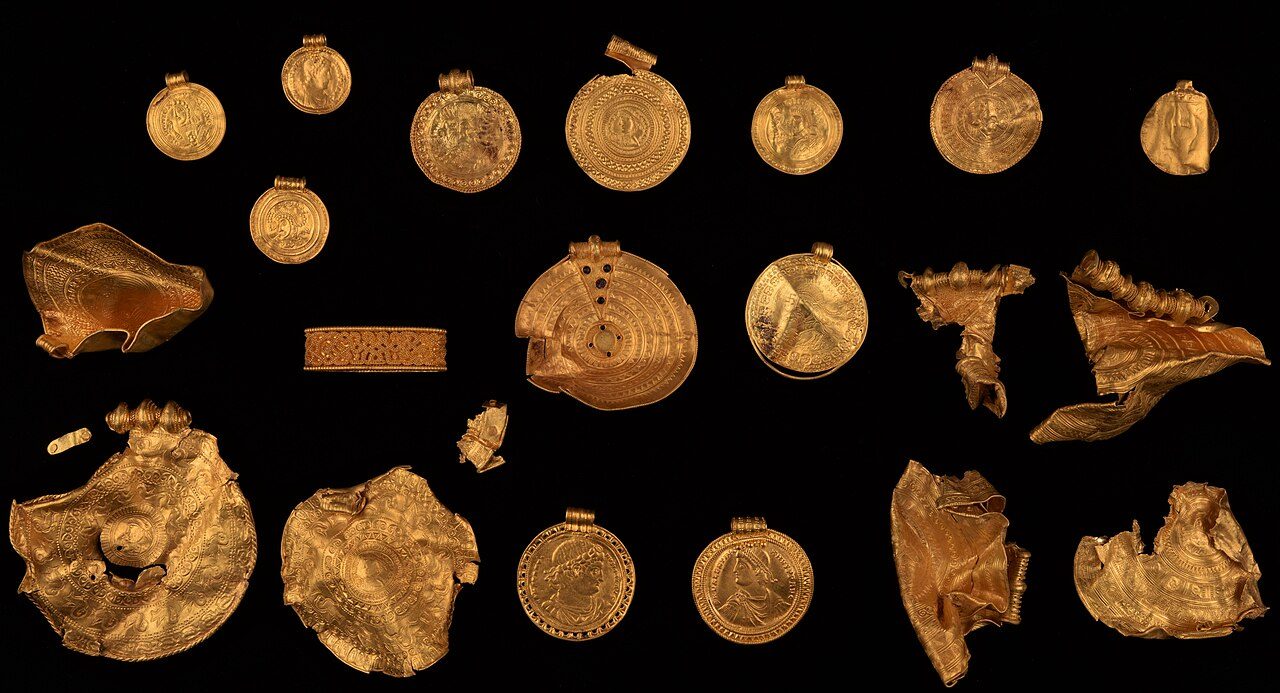
Photo: Vejlemuseerne / Vejle Konserveringscenter, CC BY-SA 4.0, via Wikimedia Commons
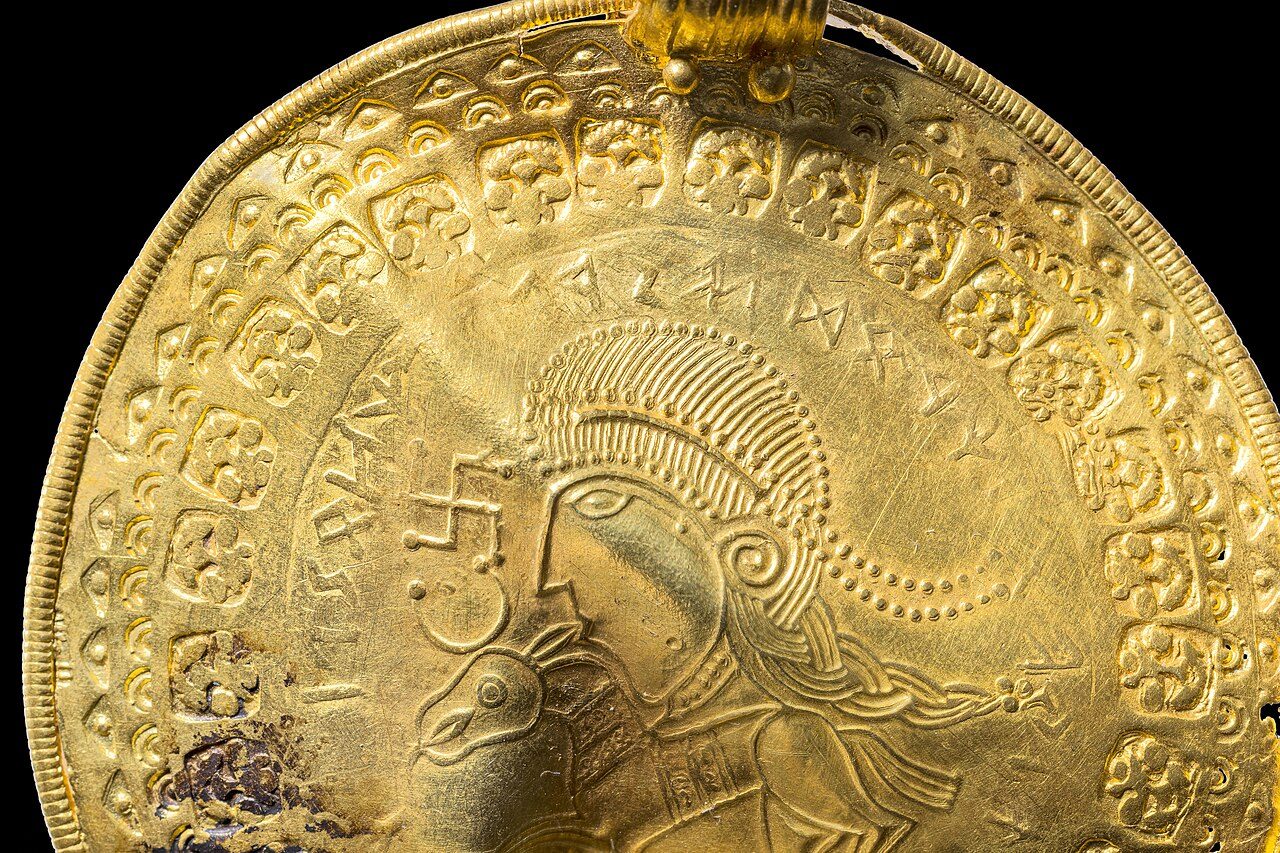
Photo: Arnold Mikkelsen, CC BY-SA 4.0, via Wikimedia Commons
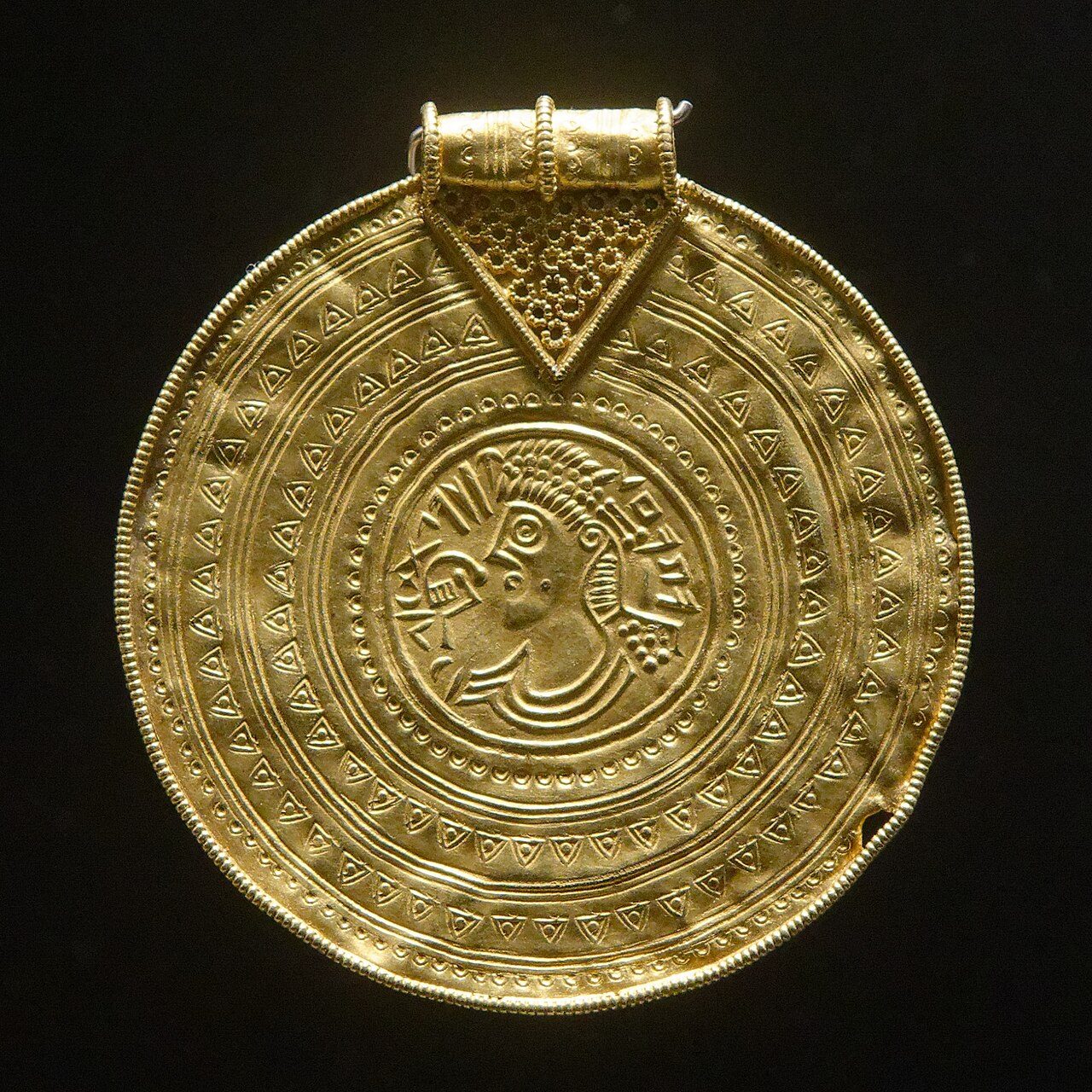
Photo: Marie-Lan Nguyen, Public domain, via Wikimedia Commons
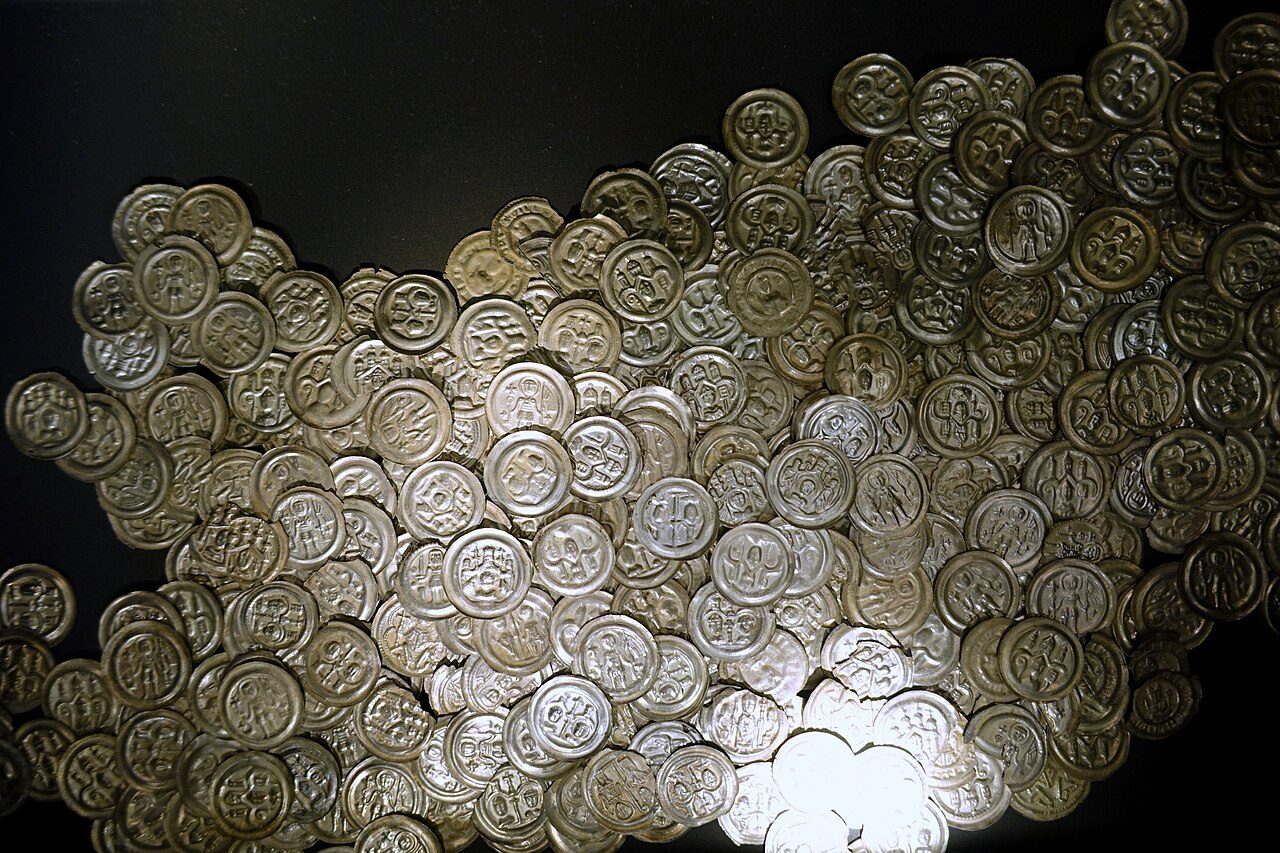
Photo: Daderot, Public domain, via Wikimedia Commons